iPhone app · version 2.1 · iOS 26
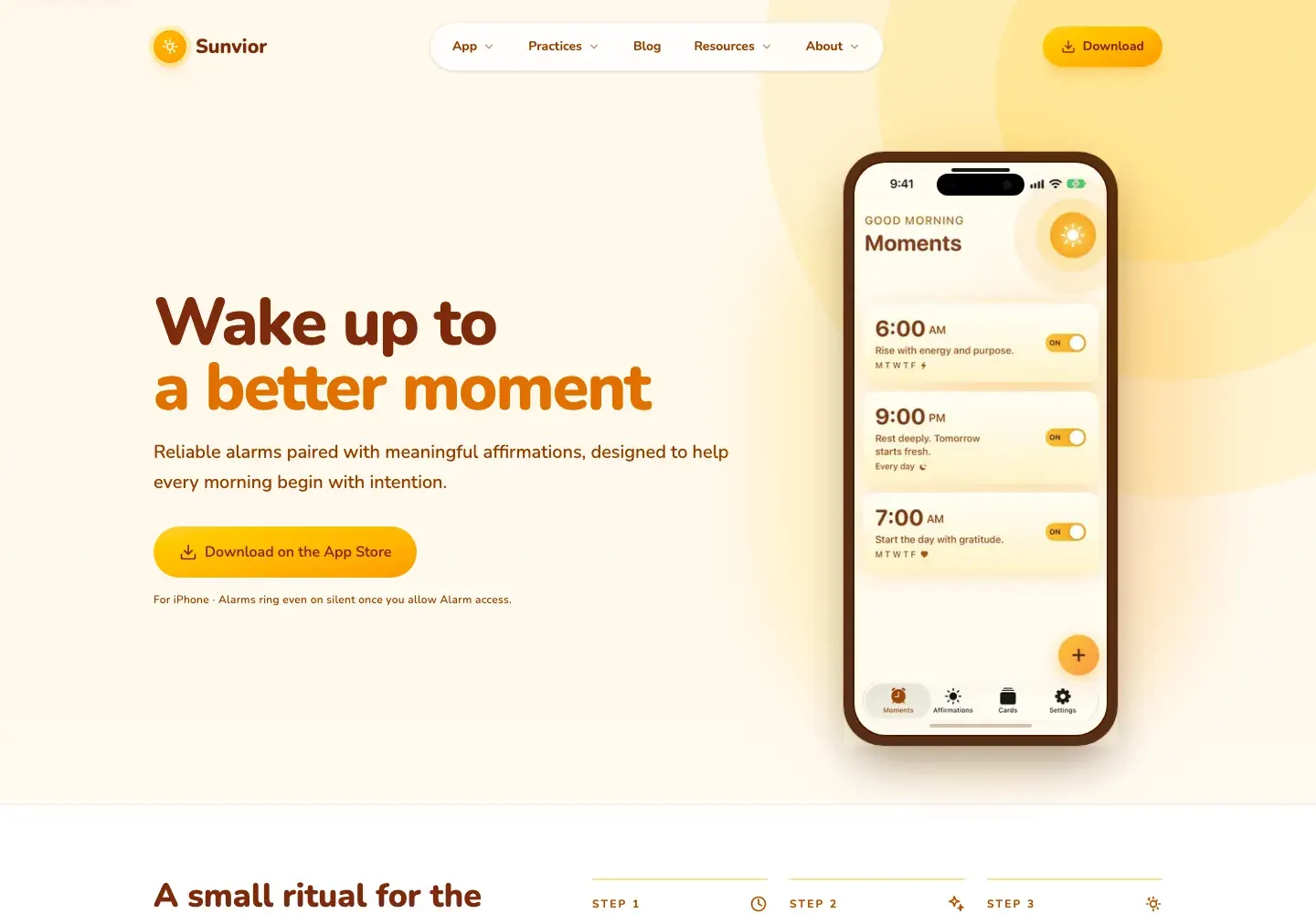
Wake up to
a better moment.
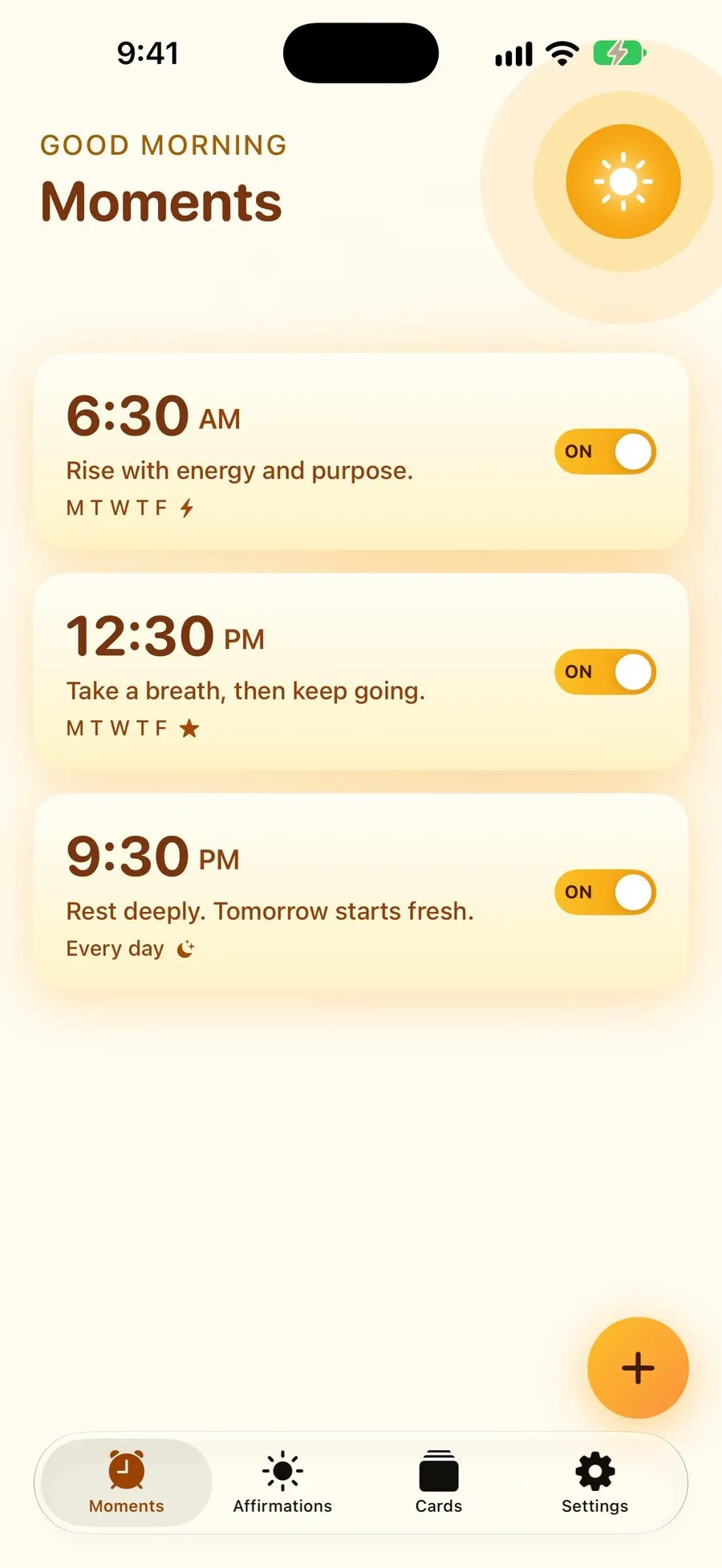
Sunvior is an iPhone alarm that wakes you with a positive affirmation: reliable alarms, a one-minute morning ritual and a fresh line every day. Michael Ruiz designed and built the app and its website.
Download on the App Store ↗How the website was rebuilt
For iPhone. Alarms ring even on silent once you allow Alarm access.
After the alarm
A small ritual for the moments that matter.
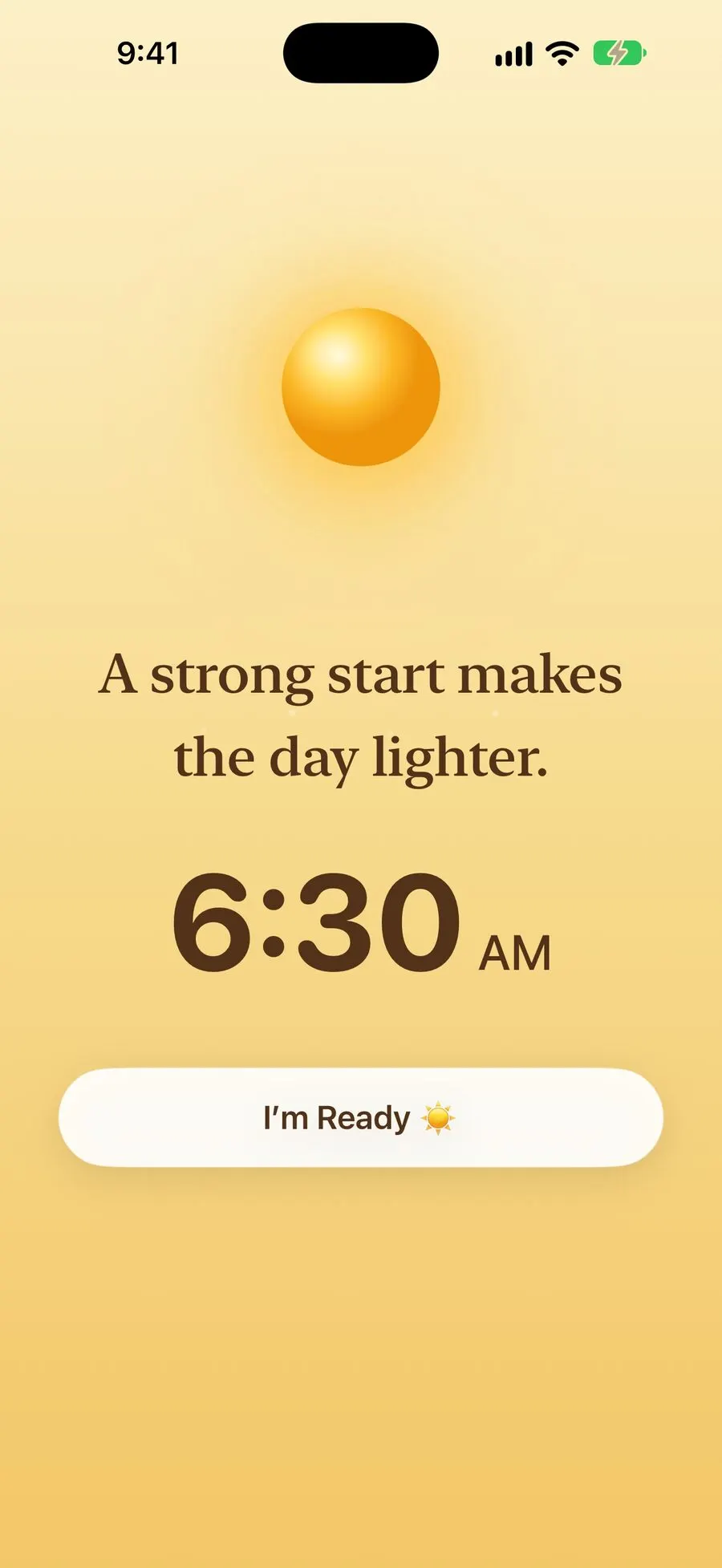
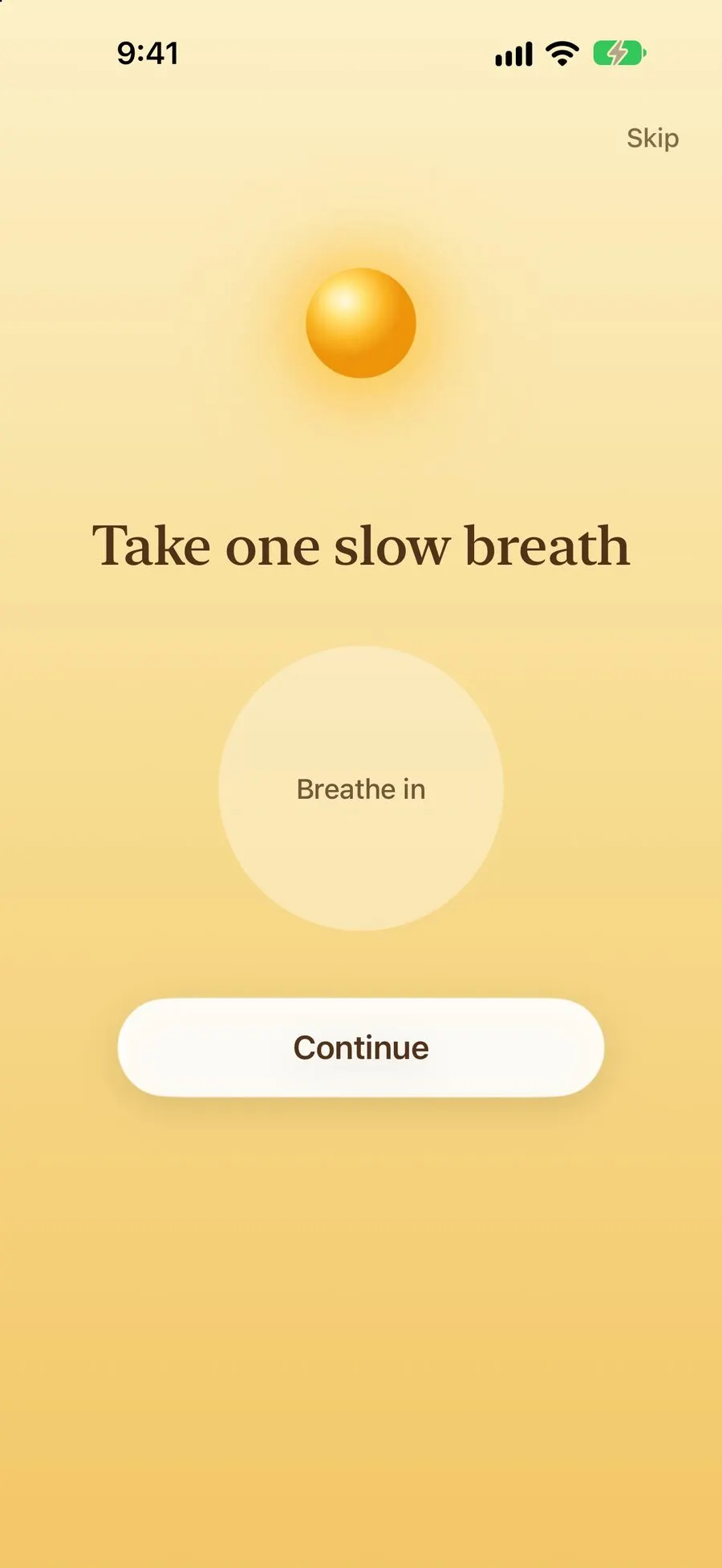
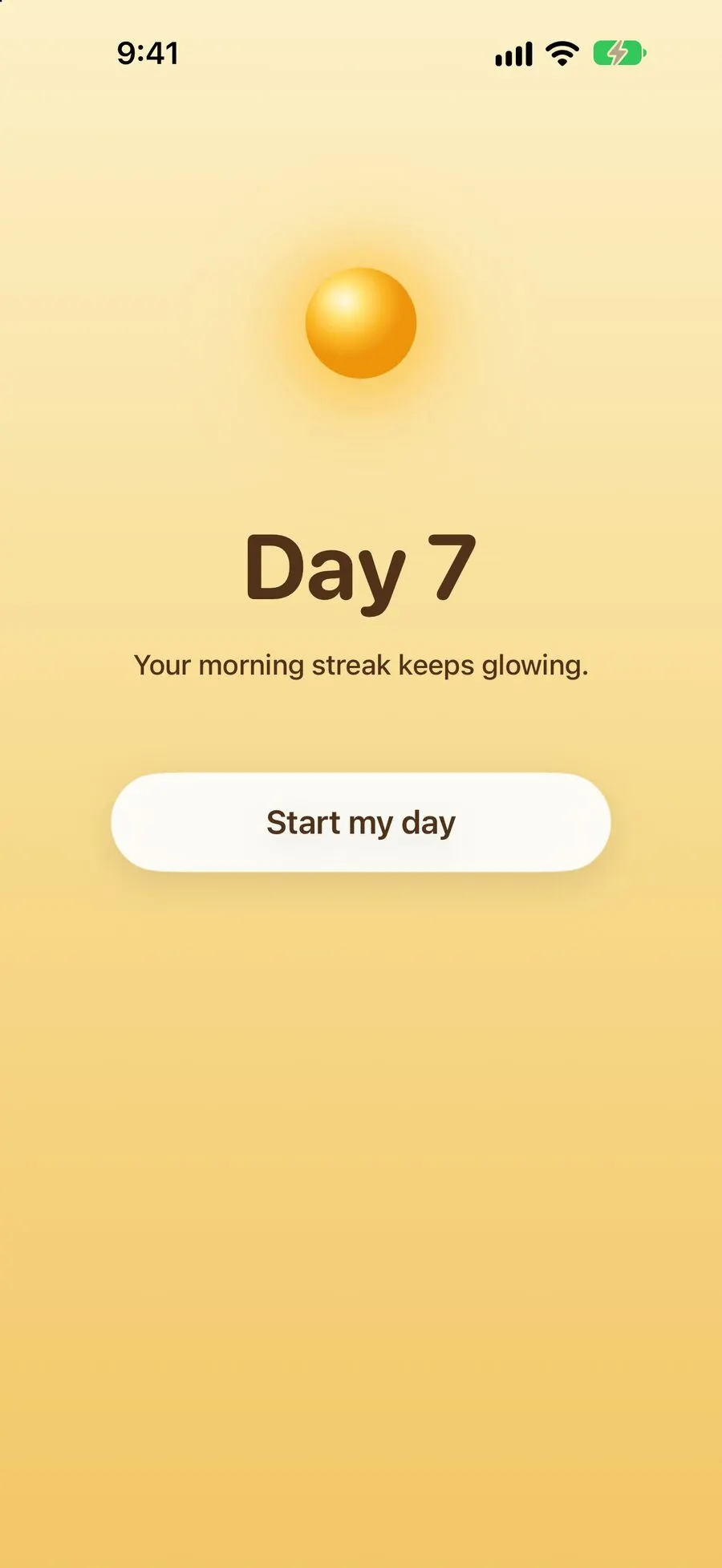
Tap Stop and Sunvior opens a one-minute ritual: one slow breath, say today’s affirmation out loud, set an intention, see your streak. Try it.
Take one slow breath
Say it out loud
Showing up is a win.
Set today’s intention
Day 7
Your morning streak keeps glowing.
Daily Light
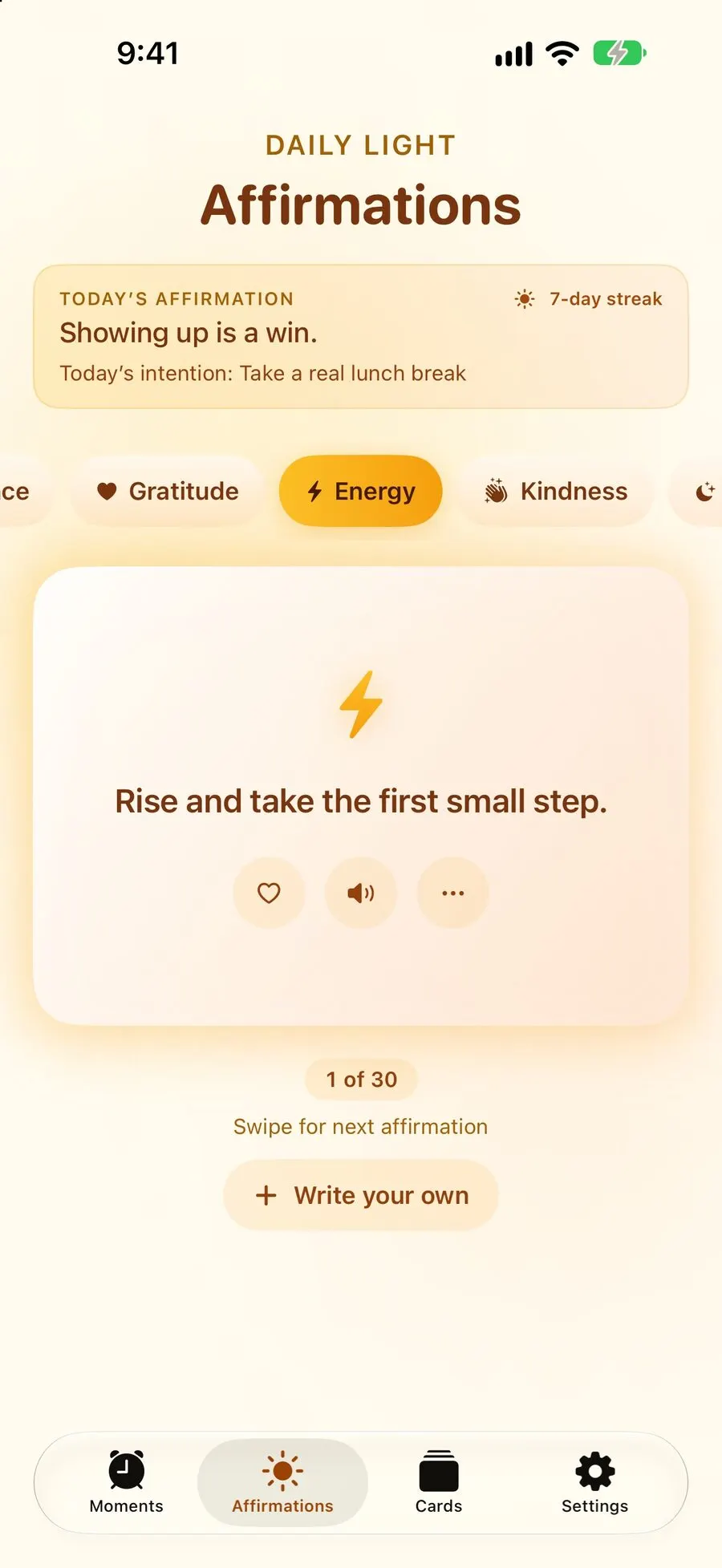
One line a day, picked for the kind of morning you need.
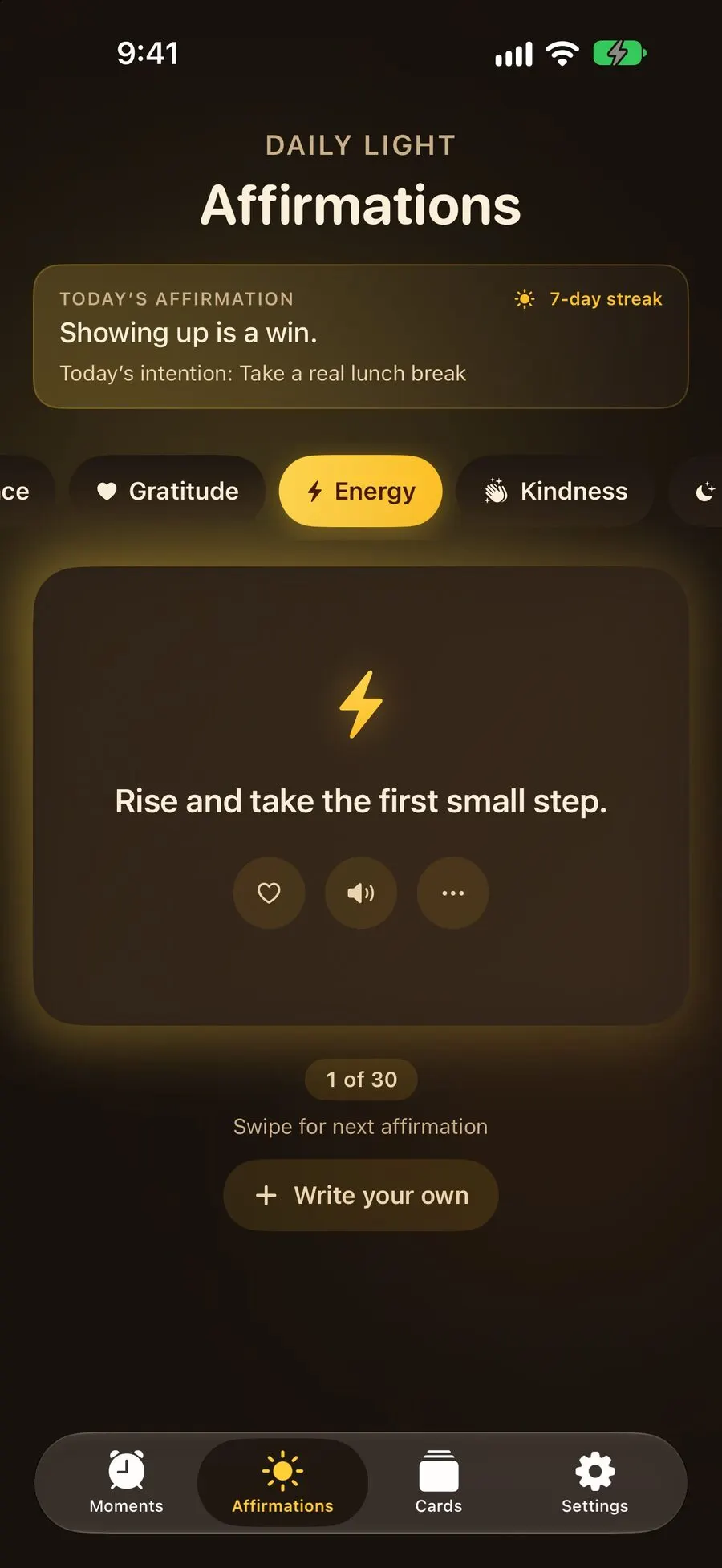
Choose a category. These are real lines from the app’s library, which rotates one per category per day.
Today’s affirmation
Rise and take the first small step.
Premium packs: Calm, Hard Days, Focus, Self-Worth, Body, Sunday Reset.
Reliable alarms
Built on AlarmKit, so alarms ring while the phone is locked, muted or in Focus. Stop opens that morning’s affirmation.
A fresh line every day
One pick per category per day, shuffled per install, never repeating within a week. Hide any line you don’t like.
12 categories
General, Confidence, Gratitude, Energy, Kindness and Night are free. Six more are Premium packs.
Your own words
Write your own affirmations and keep favorites: three free, unlimited with Premium.
Gentle wake
The in-app ring fades sound and light in over 30 seconds instead of jolting you awake.
Read aloud
Hear the affirmation in the system voice, or wake to your own recorded voice with Premium.
Widgets
A Daily Affirmation widget on the Home Screen and Lock Screen, with Premium themes.
Cards to share
Turn an affirmation into a card image and send it to someone who needs it.
- The alarm
- One slow breath
- Daily Light
- Moments
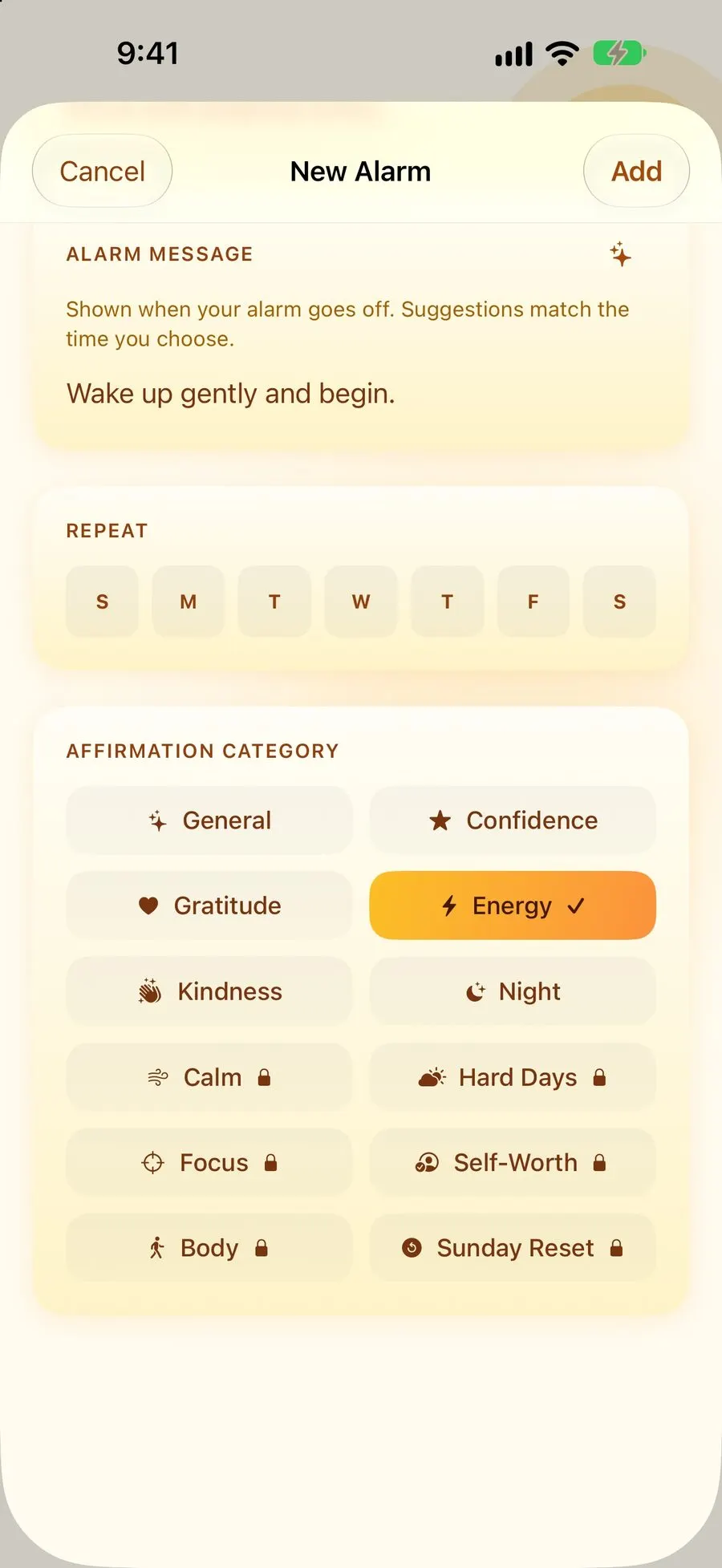 New alarm
- Dark mode
 Day 7
The website · case study
A calm surface, and a lot underneath it.
sunvior.com looked finished. Underneath, links redirected on every page, a breathing timer counted the wrong step, five widgets were silent to screen readers, and 17 of about 20 pages had drifted off their own design system. The job: fix it on the live site without a single visible regression.
What the audit found
Three passes ran in parallel: SEO, code and accessibility, and a live walkthrough in the browser, so every finding was confirmed against the real site. Each one was ranked before a line changed.
- Critical
Dead links on every page
The global nav and footer pointed at old URLs that 301-redirected on every page load.
- Critical
A timer counting the wrong step
The guided-breathing widget kept its countdown running after Stop, Prev or Next.
- Moderate
Five silent widgets
Breathing phases, timer completion and affirmation draws changed on screen but said nothing to screen readers.
- Moderate
Motion that ignored the OS setting
The breathing bubble kept scaling for people who had asked their phone for reduced motion.
- Minor
17 pages off their own design system
Most pages hand-rolled their own Tailwind instead of the shared Heading, Eyebrow and Section components.
Fix correctness first: one redirect hop, gone everywhere
BeforeNav link→301→Page
AfterNav link→Page
The nav, footer and in-page links now point at their real destinations, which removes a redirect that fired on every page load. A card on the affirmation-app page that linked back to itself is gone too.
The breathing timer, before and after
Stop, Prev and Next changed the instruction but left the old countdown running against it. Now each control re-scopes the timer to the step on screen, the phase is announced to screen readers, and the bubble holds still for people who ask for reduced motion. Flip the switch to feel the bug.
Breathe in
4s
Each step gets its own countdown.
The same pass added live regions to five widgets, guarded the bubble animation behind prefers-reduced-motion, and gave the mobile menu a real focus trap. That surfaced a browser gotcha: Chrome keeps a collapsed <details> laid out, so offsetParent and getClientRects both called hidden links focusable. Only checkVisibility() got it right.
A shared component is a blast radius
About 17 pages moved onto shared Heading, Eyebrow and Section components in batches, each screenshotted before and after. Removing one baked-in margin from a shared heading silently broke spacing on nine pages that were never opened, and the type-check passed anyway.
17 pages on one shared heading component.
- −265
- net lines across 35 files (577 removed, 312 added)
- 386
- lines of unused components deleted outright
- 5
- widgets that now announce their state
- 0
- visible regressions at mobile and desktop
Consolidation only pays off if every change to a shared default is verified against the live render of every existing consumer, not just the files you happen to be editing. Verify the blast radius, not just the diff.